Lately, I've been putting most of my writing efforts into a new novel called Below the Land. It is a fantasy adventure novel that follows two pairs of siblings as they must avoid people who mean to do them ill, all while trying to understand the incredible yet dangerous powers of the youngest of their party.
I'm very much hoping it turns out as exciting to read as it has been for me to write so far.
One of the reasons it has been so enjoyable to write is because of the research I've taken the opportunity to do in order to better inform the story. Specifically, I've spent several hours researching things such as making linen fabric, dyeing thread, and sharpening swords. Each of these hours of research was done just to make one scene slightly more believable.
The reason I find doing this research to be important is that it helps a great deal to flesh out the characters through which I'm telling the story. For example, while I'm busy telling the story from the perspective of a medieval soldier, I do my best to imagine what might be important to him and how he sees the world. I concluded that he sees the world in terms of orderliness much of the time. He prefers the things in his control to be organized. At the same time, it's important to him to do whatever he can to help and protect his sister. Interesting character developments tend to occur as these two aspects of the soldier's personality either align or conflict in various ways. However, not every aspect of this character's personality needs to be so complex. I figured that such a soldier would know how to sharpen a sword. Because of this, trying to see the world through his eyes, I figured I ought to know how to sharpen a sword as well.
It's little details like these--such as knowing the proper way to use a whetstone--that I find can help bring a story to life. And the deeper I traverse into this story, I'm sure I will continue to discover more I need to research.
And that's all part of the fun of writing.
Showing posts with label research. Show all posts
Showing posts with label research. Show all posts
Tuesday, July 28, 2015

Thursday, October 27, 2011
Research, Pt. 3: Suburbanism Can Wait
.

So apparently H.G. Wells spent his career writing about utopias.
For example, in The Time Machine he invented a future world in which everything was perfect. Every social or political problem had been resolved, and the beings of the world live in harmony. Or in War of the Worlds he considered a sort of dystopia, in which a world is thrown into utter chaos, in this case by a strong outside force that wishes to use imperialism to their own advantage.
He also sometimes presented anti-utopia, which looks at the world fragmented, questioning, revealing contradictions. Instead of examining a grand whole utopia or dystopia, he questioned the details of life as we know it, even the details of perfection or dis-perfection.
At least, that's what I got out of the three articles I looked at. And it got me thinking about my next book.
It's a story about cities and hearts, or something like that. Places where everything can be perfect, or dis-perfect, or if we want answers and solutions to our deepest questions, broken.
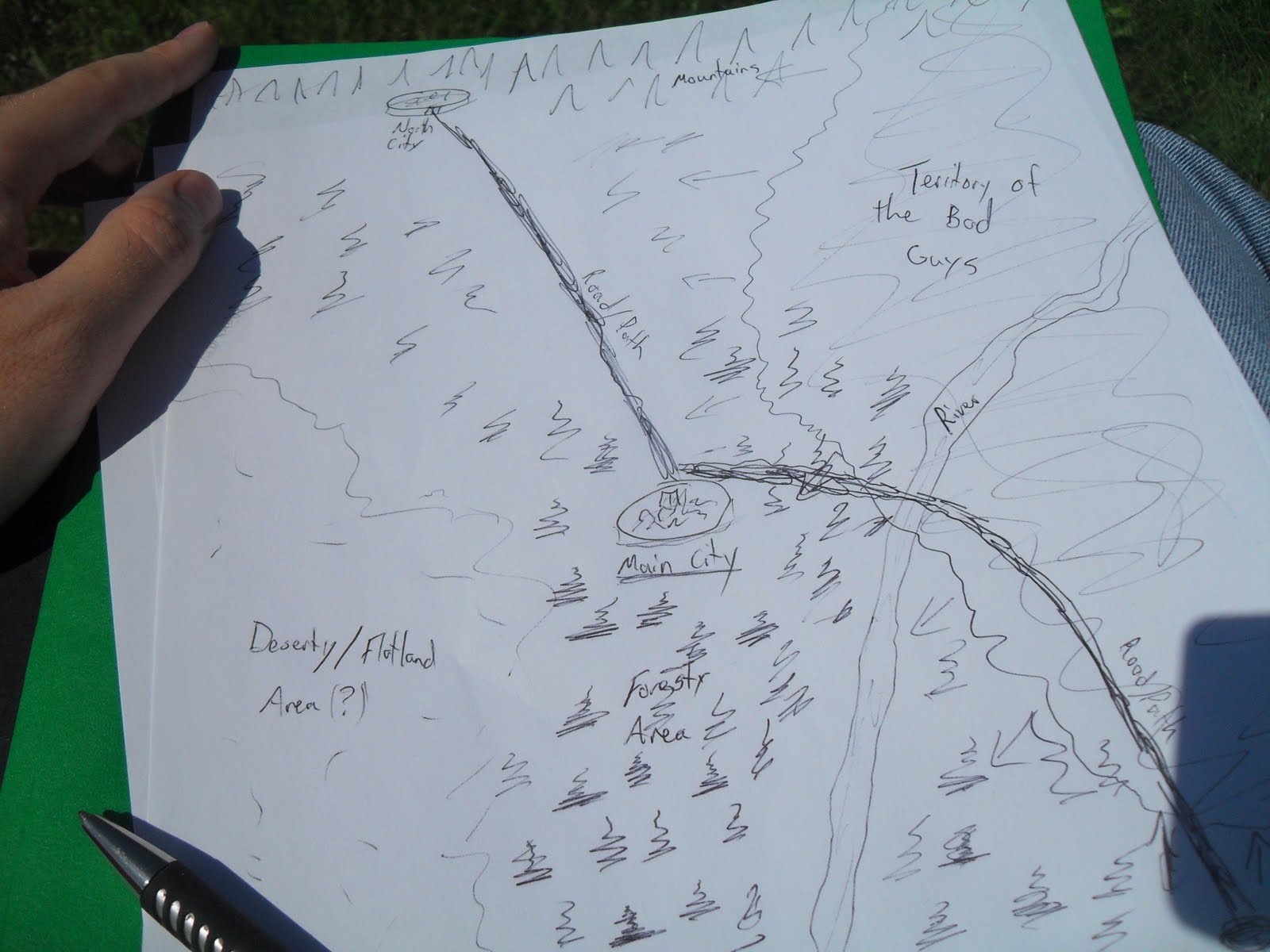
I do think perfection is good. It would be very good. And to change subjects a bit, why are there so few good guys anymore who are really good? I mean like really, really good. Like sure, they have their problems, but they never let that get in the way of doing the right thing. Maybe we need a good hero's journey. Maybe the hero of the story needs to go outside, face some bad guys who are really bad, and eventually save the day by his persistence. Maybe. We'll see what happens.
And until we meet again...(and during and afterwards)...keep on thinking free!

So apparently H.G. Wells spent his career writing about utopias.
For example, in The Time Machine he invented a future world in which everything was perfect. Every social or political problem had been resolved, and the beings of the world live in harmony. Or in War of the Worlds he considered a sort of dystopia, in which a world is thrown into utter chaos, in this case by a strong outside force that wishes to use imperialism to their own advantage.
He also sometimes presented anti-utopia, which looks at the world fragmented, questioning, revealing contradictions. Instead of examining a grand whole utopia or dystopia, he questioned the details of life as we know it, even the details of perfection or dis-perfection.
At least, that's what I got out of the three articles I looked at. And it got me thinking about my next book.
It's a story about cities and hearts, or something like that. Places where everything can be perfect, or dis-perfect, or if we want answers and solutions to our deepest questions, broken.
I do think perfection is good. It would be very good. And to change subjects a bit, why are there so few good guys anymore who are really good? I mean like really, really good. Like sure, they have their problems, but they never let that get in the way of doing the right thing. Maybe we need a good hero's journey. Maybe the hero of the story needs to go outside, face some bad guys who are really bad, and eventually save the day by his persistence. Maybe. We'll see what happens.
And until we meet again...(and during and afterwards)...keep on thinking free!
Wednesday, August 24, 2011


Friday, August 12, 2011




Subscribe to:
Posts (Atom)